- de
- en
Bavarian traditions: A deeper insight into the culture and customs of Bavaria

Bavaria is known not only for its breathtaking natural beauty and majestic castles, but also for its deeply rooted traditions, which form a major part of Bavarian identity. “Bavarian traditions” are more than just a glimpse into the past—they are a living part of daily life for the people of Bavaria.
Bavarian traditions at a glance:
- Typical customs: Maypole, Fasching, parish fair
- Well-known festivals: Oktoberfest, Gäubodenfest, strong beer festivals
- Cultural elements: traditional costume, music, crafts, cuisine
- Distinctive feature: strong community and regional identity
From the famous Oktoberfest to old crafts passed down through generations, these customs are reflected in every facet of Bavarian culture.

Explore:
What is part of Bavarian tradition and culture?
1st the adherence to old craft traditions
Bavarian traditions also include a wide variety of crafts that have often been passed down over centuries. Traditional crafts - such as iron forging, making traditional costumes, or wood carving - have a long history in Bavaria. Many of these crafts are still practiced today, especially in rural areas.
One example is the forging of “horseshoes” or the creation of hand-carved wooden figures, which are still regarded in the region as symbols of good luck and protection. In many villages, there are even festivals where artisans showcase their craftsmanship and give visitors a behind-the-scenes look at the production process.
2nd Religious and seasonal customs
Religious traditions play an important role in Bavarian life and customs. Many festivals and holidays, such as the “Kirchweihfest”, are closely linked to religion. It is not uncommon for these festivals to begin with processions and church services and often end with colorful celebrations. These religious customs date back a long time and are deeply rooted in Bavarian history.
Another example is the “Lichterschwimmen” (floating of the lights) in winter, during which small boats with candles are set afloat on rivers and lakes to pray for people’s well-being. Such customs in Bavaria have not only spiritual significance but also a deep connection to nature and the seasons.
3rd carnival in Bavaria
Carnival in Bavaria is a vibrant part of Bavarian folk culture and a time when people express their cultural values and their joy of life in a unique way. Compared to other carnival celebrations in Germany, the Bavarian Carnival has its own regional characteristics. Especially in rural areas, there are “Häusl” parades, in which participants don spooky, often handmade masks and march through the streets to drive away winter and welcome spring. These parades, also known as “fools’ parades,” are not only a spectacle but also an attempt to drive away old spirits through disguise and strengthen the community.
In cities like Munich or Passau, the carnival parades are colorful and brimming with creativity. Here, historical events, current social issues, and funny costumes are depicted in magnificent parades. Carnival season is a time of exuberance, when everyone sheds their everyday roles and transforms into a different character. This Bavarian tradition fosters a sense of freedom and joy and brings people together, regardless of their social status.
4th The custom of the maypole
The Maypole is another prominent symbol of Bavarian traditions. The custom dates back to the 16th century and is still observed in many regions today. In many small villages and towns, a Maypole is erected at the beginning of May. But the Maypole is not only a symbol of spring; it is also a symbol of the village community’s unity. In many places, erecting the Maypole is a major event where the village community gathers to decorate the tree with colorful ribbons and handcrafted ornaments. In Bavaria, the Maypole often has a deeper meaning: it represents mutual support and solidarity among the people of the region.
Especially in Upper Bavaria, Swabia, and parts of Franconia - particularly in Upper Franconia and Middle Franconia - the custom of stealing the Maypole is also widespread. Here, residents of neighboring villages try to steal each other’s Maypole - often on the night before it is erected. If they succeed, the village whose Maypole was stolen must “redeem” the tree with a snack, beer, or some other “ransom” payment before it is returned. This tradition fosters a lighthearted competition between the communities while simultaneously strengthening solidarity in the region.
5th parish fairs and folk festivals
Church consecration festivals are deeply rooted traditions in Bavaria that are often celebrated throughout the year, depending on the region. These festivals trace their origins to the consecration of a church and are important social events in many Bavarian villages. The church consecration festival is a celebration of community and devotion, marked by processions, church services, and subsequent festivities. This often includes a small fair where regional specialties are offered, and traditionally a “Kirchweihdult” is held—a market where handicrafts and local products are sold.
Folk festivals in Bavaria are far more than just fairgrounds with rides. They are an expression of Bavarian hospitality, regional pride, and joie de vivre. The most famous folk festival is the Oktoberfest in Munich, which is renowned far beyond the state’s borders. It was first celebrated in 1810 on the occasion of Crown Prince Ludwig’s wedding and today attracts around 6 million visitors annually. But smaller, local folk festivals, which take place in many Bavarian towns and villages, are also of great significance. These events are about more than just drinking beer and eating - they offer people a chance to gather, celebrate, and actively participate in preserving Bavarian traditions.
At many of these folk festivals, traditional attire - such as the dirndl for women and lederhosen for men—is an integral part of the experience. It’s not just about the clothing, but also about the sense of belonging and community that these customs convey. Musical entertainment, traditional Bavarian brass bands, and dances like the “Schuhplattler” or the “Landler” are also integral parts of these celebrations and contribute to the unique atmosphere.
6th Bavarian cuisine
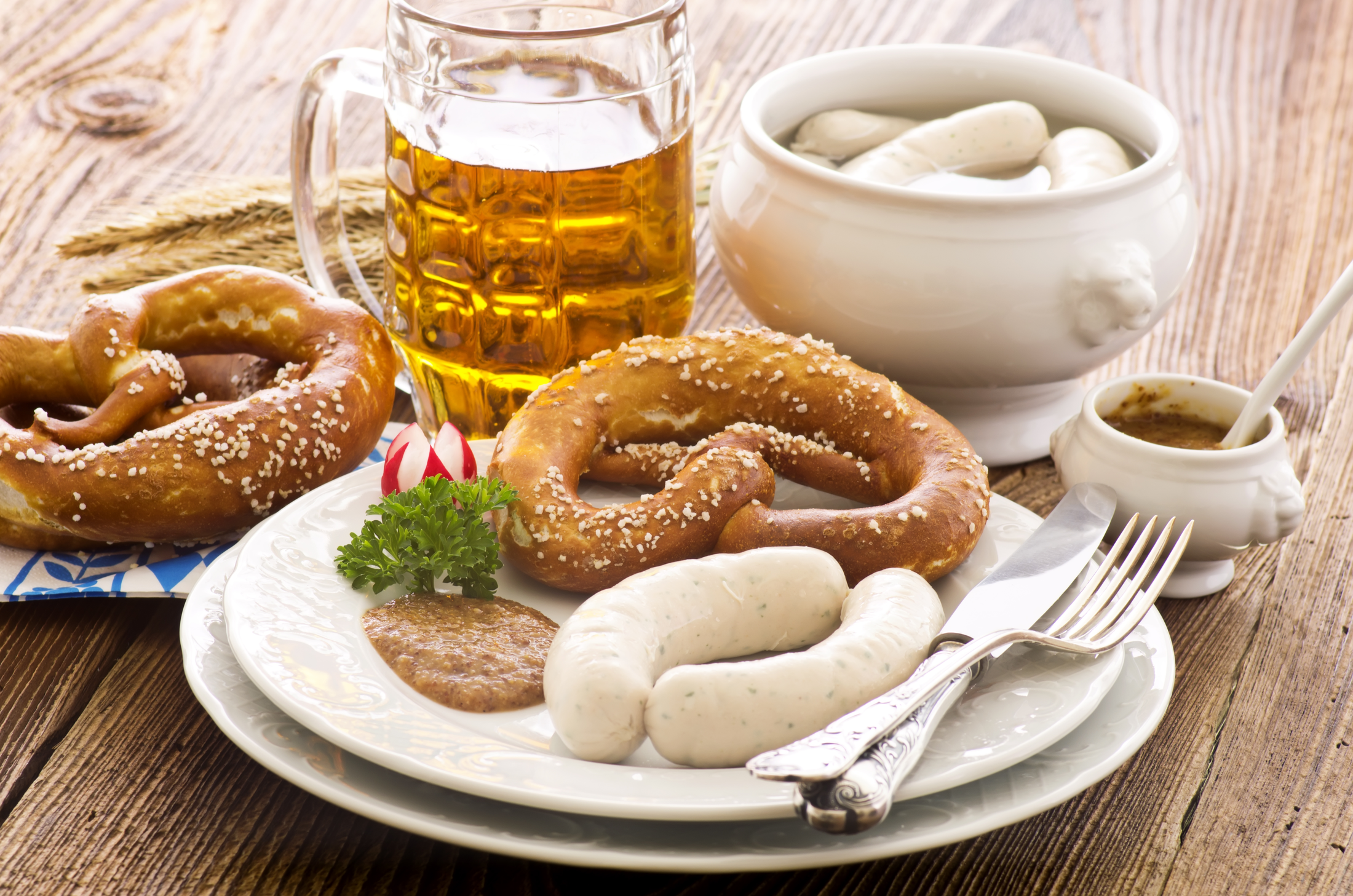
Bavarian cuisine is another strong link between people and Bavarian cultural heritage. The “Brotzeit” ,the traditional Bavarian snack, is a cherished ritual and is often enjoyed in good company. Sausage, cheese, pretzels, and a cold beer are part of a typical Brotzeit, which is often enjoyed in good company at a country inn or a traditional tavern.
Especially in the fall, there are numerous festivals where “roast pork” and “white sausages” make their way onto the tables. Bavarian beer also has a long tradition and is not just a beverage, but an important part of Bavarian cultural heritage. As early as 1516, the Reinheitsgebot (Purity Law) was enacted, making it one of the oldest food regulations in the world. Over the centuries, Bavarian breweries have developed beer-brewing techniques that are still of great importance in Bavaria today.
Experience Bavarian traditions up close
Bavarian traditions are not only fascinating but also deeply rooted in the region’s history and culture. They offer a unique insight into the lives and values of the people of Bavaria. So if you’d like to learn more about these vibrant traditions, you can do so on our one-day bus tours departing from Munich and experience not only Bavaria’s natural beauty but also its culture in all its diversity.
Frequently Asked Questions About Bavarian Traditions
What Are the Most Important Bavarian Traditions?
Among the most important Bavarian traditions are Oktoberfest, the Maypole, Fasching, as well as parish fairs and regional folk festivals. Traditional costumes such as dirndls and lederhosen, Bavarian cuisine, and folk music are also defining elements of Bavarian customs and living folk culture.
How long does Oktoberfest last?
Oktoberfest usually lasts 16 to 18 days and takes place every year at the Theresienwiese in Munich. It begins in mid-September and ends in early October. If German Unity Day falls on a Monday or Tuesday, the festival is often extended until that date.
What is the traditional Bavarian costume?
The traditional Bavarian costume traditionally consists of a dirndl for women and lederhosen for men. It is complemented by accessories such as a traditional hat, Haferl shoes, or an apron. The costume is an important part of Bavarian traditions and is worn primarily at folk festivals such as Oktoberfest.
Why are traditions so important in Bavaria?
Traditions are important in Bavaria because they strengthen regional identity, foster a sense of community, and are passed down from generation to generation as part of Bavaria’s cultural heritage. They create a sense of belonging and bring people together through shared rituals and festivals. A well-known example is the Maypole: During the annual raising of the Maypole, village communities work together, celebrate together, and uphold old customs. In this way, tradition is not only preserved but actively lived and remains a central part of Bavarian culture.
Where can you experience Bavarian traditions?
Bavarian traditions can be experienced primarily at folk festivals, in beer gardens, and at regional events. The Oktoberfest in Munich is particularly well-known, where traditional costumes, music, and Bavarian customs come together. Smaller village festivals, cattle drives, or the raising of the Maypole also offer authentic insights into Bavarian culture and the living preservation of traditions.
What is the difference between a dirndl and a traditional costume?
A dirndl is a specific type of traditional costume for women and typically consists of a dress, an apron, and a blouse. The term “traditional costume,” on the other hand, is a general term that encompasses all traditional clothing of a region - including both dirndls and lederhosen for men, as well as other regional variations. Thus, the dirndl is part of the traditional costume and an important element.
You might also be interested in

World Heritage Sites in Bavaria
Discover 14 unique UNESCO sites steeped in history, culture, and impressive architecture.

Top 10 sights in Bavaria
Discover the top 10 sights in Bavaria, from Neuschwanstein Castle to Munich. Find out about the best attractions in Bavaria.

The history of Neuschwanstein Castle
Are you fascinated by the past of Bavarian castles? Here you can find out all about the history of one of Bavaria's most magnificent castles: Neuschwanstein Castle.